


Nari Shakti Is India's Greatest Economic Multiplier
Dr. Pankaj Shukla Charts the Roadmap from Grassroots Empowerment to Viksit Bharat 2047
March 7, 2026 — As India marks International Women's Day 2026, a powerful transformation is unfolding across the nation's economic and social landscape. Women are no longer merely participants in development — they are emerging as its central architects. With a record ₹5.01 lakh crore gender budget, a female labour force participation rate that has surged to over 60 percent, and more than 10 crore women organised into the world's largest grassroots financial network, the foundation of a developed India — Viksit Bharat 2047 — is increasingly being built on the strength of Nari Shakti.
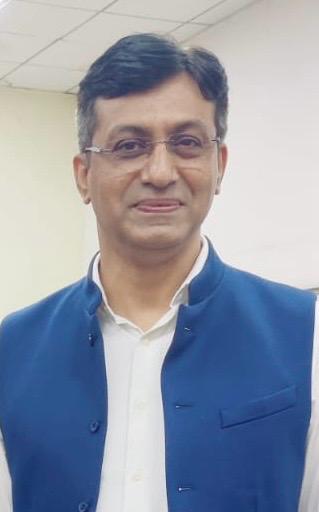
Yet, according to Dr. Pankaj Shukla, a grassroots development leader with more than 25 years of experience working with rural and tribal communities, the country now stands at a decisive inflection point: the era of access must evolve into the era of ownership. "International Women's Day is an opportunity to reflect not just on achievements, but on our direction," said Dr. Shukla, Chairman and Managing Director of Gramya, President of the Association for Sustainable Rural Employment (ASRE), and Vice President of the Karate Association of India. "With nearly half of India's population being women, their empowerment is not merely a social issue — it is the most powerful economic lever we possess. India has made extraordinary progress in providing access to finance, digital connectivity, and opportunity. The next phase must convert that access into tangible financial ownership, entrepreneurship, and leadership."
Dr. Shukla's perspective is shaped by decades of work at the intersection of national policy and village realities — from tribal districts in Telangana to farming communities in Madhya Pradesh and rural sports academies nurturing young girls across the country. His experience reveals a crucial truth: India's development story will ultimately be written not in policy documents, but in the everyday lives of women in villages, farms, classrooms, and enterprises. The Union Budget 2026-27 has allocated a record ₹5.01 lakh crore for women-focused schemes — representing 9.37 percent of the total Union Budget, an 11.55 percent increase from the previous year. Of this, ₹1,07,688 crore is exclusively reserved for women-specific programmes spanning housing, livelihoods, health, and entrepreneurship. The signal from the highest levels of governance is clear: India's development strategy is betting on its women.
A Historic Policy Moment for Women's Economic Empowerment
Recent government data reflects a decade of focused policy investment. The MoSPI Women and Men in India 2024 report documents a Female Labour Force Participation Rate that has surged from 49.8 percent in 2017-18 to 60.1 percent in 2023-24 — one of the fastest increases in women's workforce participation in the country's history. "This is not a marginal shift," Dr. Shukla noted. "Women are increasingly moving from unpaid labour and informal work to entrepreneurship and economic leadership." In rural India, where nearly 65 percent of the population resides, women now constitute over 64 percent of the agricultural workforce, contributing to more than 80 percent of rural produce across every stage of the agricultural cycle — from sowing and harvesting to livestock management and food processing.
The Financial Inclusion Paradox: Access Without Agency
India's financial inclusion story over the past decade is remarkable by any measure. Bank account ownership among women has risen from just 26 percent in 2011 to 89 percent today — a transformation enabled by the Pradhan Mantri Jan Dhan Yojana, which has opened over 55 crore accounts, more than half held by women. The financial inclusion index has climbed to 67.0, and the gender gap in formal banking has been virtually eliminated. And yet, the data reveals a paradox that Dr. Shukla describes as the defining challenge of this moment: 72 percent of Indian women who hold bank accounts do not use them meaningfully for savings or investment. Only 21 percent of women in India are financially literate. Women account for just 17 percent of active personal loans and 13 percent of credit card outstandings.
The opportunity cost of this adoption gap is estimated at ₹2.8 lakh crore — the value of the BFSI sector's untapped market among India's 7.5 crore working women. Meanwhile, women-led MSMEs face a structural credit shortfall exceeding USD 158 billion, and 95 percent of women entrepreneurs remain unaware of government financial schemes available to them, according to the Bharat Women Aspiration Index 2024. The architecture of inclusion has been built; the furniture of capability and awareness has not yet arrived.
"We have given women the door. Now we must give them the key," Dr. Shukla said. "Financial literacy is not optional infrastructure — it is the foundation on which every other intervention rests. Without it, bank accounts are inert, government schemes go unclaimed, and potential enterprises never begin."
"This is not a problem of capability," Dr. Shukla explained. "Women borrowers consistently demonstrate stronger credit behaviour and lower default rates. The real barriers are awareness, access to information, and structural biases in financial systems that have yet to fully recognise women as the disciplined economic agents the data proves them to be." The numbers bear this out: 66 percent of women borrowers fall into prime or higher credit score brackets compared to 60 percent of men, and their delinquency rate stands at just 1.6 percent against 2.2 percent for men. The risk calculus already favours women. The financing gap is not a matter of creditworthiness — it is a matter of institutional design.
The Rural Economy: Women as Architects of India's Food Security
Nowhere is women's economic contribution more foundational — or more structurally underrecognised — than in agriculture. According to the latest Periodic Labour Force Survey data, nearly 76.9 percent of rural women are engaged in agriculture and allied activities, including farming, livestock management, dairy production, and food processing. Overall female participation in the agricultural workforce has reached 64.4 percent, compared to just 36.3 percent for men. Women are, by every measure, the backbone of India's rural food economy — contributing to over 80 percent of the country's rural produce through hands-on involvement in every stage of the agricultural cycle.
Yet only 13 percent of rural women engaged in agriculture hold land titles in their names, and women account for just 16 percent of beneficiaries under the Pradhan Mantri Fasal Bima Yojana for Rabi crops in 2024. The structural barriers of limited land ownership, inadequate credit access, and restricted technology adoption constrain what is arguably India's most productive agricultural labour force. Research from the Observer Research Foundation indicates that equitable resource access could boost agricultural productivity by 20 to 30 percent and increase rural household incomes by 15 to 25 percent — outcomes that would meaningfully accelerate India's path to the 8 percent annual GDP growth needed for Viksit Bharat.
Dr. Shukla's Mission Annapurna, one of Gramya's flagship programmes, operates precisely at this fault line. Piloted across 100 villages, it connects women farmers with advanced agricultural practices, sustainable techniques, organic certification, and value-added agri-enterprise models. Early results show yield increases of 25 percent through drip irrigation and direct market access to urban supply chains, benefiting 20,000 women who have transitioned from subsistence farming to surplus creation. The Namo Drone Didi initiative, which trains women as high-tech agricultural service providers for crop monitoring and pesticide application, represents another dimension of this technological leap — repositioning women not as labourers in a traditional system but as innovators at its frontier.
For Dr. Shukla, the Lakhpati Didi movement represents the clearest expression of this transition at scale. Under the DAY-NRLM, India has mobilised over 10.05 crore rural women into 90.90 lakh Self-Help Groups. The government has set a target to create 6 crore Lakhpati Didis — women earning over ₹1 lakh annually — and a new national campaign launched in January 2026 aims to train an additional 50 lakh SHG members. The newly announced SHE-Mart retail hubs, which establish district-level outlets operated by SHG federations, will enable women producers to sell directly, build brands, and secure better price realisation without intermediaries — closing the last mile between village production and market value.
Women-Led MSMEs: The Silent Revolution in Entrepreneurship
India's entrepreneurship landscape is being quietly reshaped by women. Of the country's 63 million MSMEs — the backbone of an economy contributing 30 percent to GDP and employing over 110 million people — approximately 39 percent are now women-owned, a historic peak, and these enterprises have generated employment for more than 2.1 crore people, proving that women are not merely job seekers but prolific job creators. Women-directed startups recognised by the DPIIT rose from 1,943 in 2017 to 17,405 in 2024, representing over 800 percent growth in seven years. PM Mudra Yojana has disbursed over ₹32.61 lakh crore across 52 crore loan accounts since 2015, with women accounting for 68 percent of all beneficiaries — and a repayment rate exceeding 98 percent. These are not marginal contributions; they are structural pillars.
The investment case for women-led enterprises is compelling by any metric. Boston Consulting Group data shows that women-led companies generate 10 percent higher cumulative revenue over five years than those led by men. And yet, women founders in India receive only ₹4 for every ₹100 raised by their male counterparts — a funding disparity documented in the Kalaari Capital "The ₹4 Problem" report — that cannot be explained by performance. It can only be explained by systemic bias. Dr. Shukla's Mission Shakti addresses this directly through skill training, financial literacy programming, and enterprise development support, generating ₹500 crore in collective revenues in 2025 and lifting participant incomes by an average of 40 percent. When women scale from local vendors to national brands, the multiplier effect reaches families, communities, and the broader economy.
Digital Inclusion: The New Arena of Nari Shakti
India's digital revolution is creating new avenues for women's economic participation at a pace unimaginable a decade ago. Active internet users have surged to 958 million, with 57 percent from rural areas, and the PM Gramin Digital Saksharta Abhiyan has trained over 7 crore rural citizens with a significant focus on women, resulting in a 25 percent increase in female digital literacy in targeted districts. Female DEMAT account holders grew 4.2 times — from 6.67 million in 2021 to 27.71 million in 2024 — reflecting fast-growing formal financial participation. UPI transactions facilitated by Jan Dhan accounts held by women crossed ₹200 lakh crore in 2025.
E-commerce has been transformative. Amazon India's Saheli programme has onboarded 1.5 lakh women entrepreneurs by 2026, boosting incomes by 30 to 50 percent on average, while the ONDC platform saw transaction volumes for women-led ventures grow 60 percent year-on-year in 2025. Digital education platforms like DIKSHA and SWAYAM have enrolled 2.5 crore women learners in upskilling courses ranging from coding to agri-tech. The gender gap in STEM enrollment has narrowed to 28 percent in 2025 from 35 percent in 2020, and today 43 percent of STEM students in India are women — a figure that leads the world and bodes well for the technology-intensive economy that Viksit Bharat demands.
Yet the digital gender divide persists. Women remain 33 percent less likely than men to use mobile internet, and only 40 percent of rural women own smartphones compared to 65 percent of men. Seventy percent of women report online harassment as a deterrent to digital engagement. The infrastructure of access exists; the superstructure of safety, affordability, and literacy requires urgent investment. Budget 2026's allocation of ₹1,500 crore for women-centric digital hubs is a step in the right direction, but Dr. Shukla argues it must be accompanied by grassroots literacy programmes that translate digital access into genuine agency. "Digital access must translate into digital confidence," he said. "When women control technology, they gain access to markets, knowledge, and opportunities that were previously out of reach."
Health and Dignity: The Foundation No Policy Can Skip
Empowerment that does not begin with health and dignity is empowerment on unstable ground. India's flagship maternal health programmes have delivered measurable progress. The Maternal Mortality Ratio has declined from 130 per lakh live births in 2014-16 to 88 in 2021-23, a 32 percent reduction attributable to interventions including the Pradhan Mantri Matru Vandana Yojana, which has disbursed ₹20,000 crore to 4.26 crore beneficiaries, and the Pradhan Mantri Surakshit Matritva Abhiyan, which screens 3 crore women annually for high-risk pregnancies. Ayushman Bharat has issued over 42.78 crore health cards, with women holding 49 percent, enabling 49 percent of 11.22 crore hospital admissions to be availed by women — saving an estimated ₹1 lakh crore in out-of-pocket expenses.
Sanitation has been an underappreciated driver of women's empowerment. The Swachh Bharat Mission's construction of 12 crore individual household latrines has achieved 100 percent rural sanitation coverage, reducing urinary infections among women by 30 percent and school dropout rates among girls by 20 percent, according to Wilson Center analysis. The Jal Jeevan Mission's extension of tap water to 81.5 percent of rural households has collectively saved women billions of hours previously spent fetching water — time now redirected toward economic activity, education, and community engagement. These are not marginal welfare improvements. They are productivity investments with direct GDP implications.
Gramya's Village Counsellor programme, staffed 80 percent by women, extends these national programmes to their last mile — providing integrated guidance on nutrition, sanitation, maternal health, and entrepreneurship across Madhya Pradesh, Uttar Pradesh, Bihar, and tribal districts in Telangana. The Village Dairy Counsellor network complements this by linking women farmers to cooperative structures, boosting dairy outputs by 30 percent and connecting communities to national supply chains through Amul partnerships.
Sports: Building the Leadership Pipeline
The arena is among the most powerful metaphors for national transformation — and India's women have claimed it with increasing authority. At the 2023 Asian Games, Indian women athletes won 43 percent of the country's total medals. In the 2025 Paris Olympics qualifiers, 60 percent of India's contingent was female, securing 12 quotas in athletics and boxing alone. The Khelo India Mission, backed by ₹1,000 crore in FY 2025-26, has nurtured over 3,000 women athletes annually. Registered women footballers have quadrupled since 2016 to 25,000 by 2026. The Khelo India Winter Games 2026 featured approximately 900 athletes from 25 states, with women's participation at record levels across ice and snow disciplines.
As Vice President of the Karate Association of India, Dr. Shukla has championed martial arts training as a vehicle for far more than athletic achievement. "When a girl from a tribal village learns karate, she is not just learning a sport. She is learning that her body is strong, her mind is capable, and her future is hers to shape. That is the essence of Nari Shakti — and it is the foundation on which Viksit Bharat 2047 must be built." The confidence, discipline, and resilience cultivated through competitive sport translate directly into the leadership qualities India needs in its boardrooms, its panchayats, its agricultural cooperatives, and its legislative chambers — where women currently hold just 14.94 percent of Lok Sabha seats, well below the global average of 26.5 percent.
The Road to 2047: A Call to Structural Action
The data that accompanies International Women's Day 2026 tells a story of genuine, historic progress and a frontier of opportunity that India cannot afford to leave unclaimed. Female Labour Force Participation has risen from 49.8 percent in 2017-18 to 60.1 percent in 2023-24. Female literacy has climbed from 8.86 percent at Independence to 77.7 percent today. The Sex Ratio at Birth has improved from 918 in 2014-15 to 930 in 2023-24. The Gross Enrollment Ratio for girls in secondary schools has reached 78 percent. Women's pension enrolments under Atal Pension Yojana surged in 2025. These are not abstractions. Behind every percentage point is a woman who now controls her own income, a girl who stayed in school, a mother who survived childbirth.
And yet, women's contribution to India's GDP stands at only 18 percent despite their constituting nearly half the population. Women earn 73 paise for every rupee earned by men. Urban women's workforce participation remains at only 25.4 percent. The structural exclusions that persist — in credit access, digital safety, land ownership, political representation, and formal sector employment — are not residual problems. They are the frontier on which Viksit Bharat will be won or lost. Global research makes the economic case with clarity: closing the gender employment gap could increase India's GDP growth by 2 to 3 percent annually, while bridging the digital gender divide alone could add hundreds of billions of dollars to the economy by 2047.
Dr. Shukla's vision for 2047 is grounded in this evidence and built on two decades of implementation at the grassroots. "Our goal is clear: 70 percent workforce participation for women by 2047. When a woman is empowered, she does not just transform her own life — she transforms her entire community. When women innovate in agriculture, lead enterprises, participate fully in the digital economy, and represent the nation in sports arenas and legislative chambers, India's journey toward Viksit Bharat 2047 becomes not just possible — it becomes inevitable. Nari Shakti is the most powerful investment India can make."
About Dr. Pankaj Shukla: Dr. Pankaj Shukla is the Chairman and Managing Director of Gramya, President of ASRE, and Vice President of the Karate Association of India. With over 25 years at the grassroots of women's empowerment, he leads programmes spanning women's enterprise development, rural agriculture, digital inclusion, health, and sports participation across tribal and rural India.
About Gramya: Gramya is a rural development organisation working at the intersection of women's leadership, agricultural enterprise, and digital inclusion. Its flagship programmes — Mission Shakti, Mission Annapurna, and the Village Counsellor Network — build the grassroots infrastructure through which national development goals become lived realities for women across rural India.
Media Contact: 9818266704
Data Sources: MoSPI 'Women and Men in India 2024'; Union Budget 2026-27 (GoI); Economic Survey 2024-25; PLFS 2023-24; LXME-EY Financial Inclusion Report 2025; RedSeer Strategy Consultants 2025; Kalaari Capital 'The ₹4 Problem'; BCG Women Entrepreneurs Report; Bharat Women Aspiration Index 2024; DPIIT Startup India Data 2024; GSMA Mobile Internet Gender Gap Report 2025; NRLM Mission Dashboard 2026; PIB / PMMY 10-Year Report; NFHS-6; Wilson Center Sanitation Analysis; Observer Research Foundation Agricultural Productivity Study.
==============================
तत्काल प्रकाशन के लिए
नारी शक्ति भारत की सबसे बड़ी आर्थिक शक्ति
डॉ. पंकज शुक्ला ने जमीनी सशक्तिकरण से विकसित भारत 2047 तक का रोडमैप प्रस्तुत किया
7 मार्च 2026 — भारत जब अंतरराष्ट्रीय महिला दिवस 2026 की दहलीज पर खड़ा है, तब देश के आर्थिक और सामाजिक परिदृश्य में एक युगांतरकारी परिवर्तन स्पष्ट दिखाई दे रहा है। आज महिलाएं केवल विकास की लाभार्थी नहीं, बल्कि उसकी मुख्य शिल्पकार बन चुकी हैं। ₹5.01 लाख करोड़ के ऐतिहासिक जेंडर बजट, महिला श्रम भागीदारी दर (LFPR) के 60 प्रतिशत के पार पहुंचने और 10 करोड़ से अधिक महिलाओं के दुनिया के सबसे बड़े जमीनी वित्तीय नेटवर्क में संगठित होने के साथ, विकसित भारत 2047 की नींव अब पूरी तरह 'नारी शक्ति' पर टिकी है। ग्रामीण और आदिवासी क्षेत्रों में पिछले 25 वर्षों से सक्रिय विकास विशेषज्ञ और ग्राम्य के चेयरमैन डॉ. पंकज शुक्ला के अनुसार, भारत इस समय एक ऐसे निर्णायक मोड़ पर है जहां केवल अवसर देना पर्याप्त नहीं है, बल्कि महिलाओं को वास्तविक आर्थिक स्वामित्व सौंपना अनिवार्य हो गया है।
डॉ. पंकज शुक्ला का मानना है कि अंतरराष्ट्रीय महिला दिवस उपलब्धियों के जश्न के साथ-साथ भविष्य की दिशा तय करने का भी अवसर है। भारत की लगभग आधी आबादी महिलाओं की है, इसलिए उनका सशक्तिकरण केवल एक सामाजिक सरोकार नहीं, बल्कि राष्ट्र का सबसे शक्तिशाली आर्थिक हथियार है। डॉ. शुक्ला का दृष्टिकोण राष्ट्रीय नीतियों और गांवों की धरातलीय सच्चाइयों के बीच के सेतु के रूप में उभरा है। तेलंगाना के सुदूर आदिवासी जिलों से लेकर मध्य प्रदेश के कृषि बेल्ट तक, उन्होंने देखा है कि भारत की असली विकास गाथा नीतिगत दस्तावेजों से कहीं अधिक खेतों, स्कूलों और छोटे ग्रामीण उद्यमों में काम कर रही महिलाओं के जीवन में आ रहे बदलावों से लिखी जा रही है। बजट 2026-27 में महिलाओं के लिए आवंटित ₹5.01 लाख करोड़, जो कुल बजट का 9.37 प्रतिशत है, इसी बदलती रणनीति का प्रमाण है।
आंकड़े गवाह हैं कि पिछले एक दशक में किए गए नीतिगत निवेश के परिणाम अब धरातल पर दिखने लगे हैं। 'Women and Men in India 2024' रिपोर्ट के अनुसार, महिलाओं की कार्यबल में भागीदारी 2017-18 के 49.8 प्रतिशत से बढ़कर 2023-24 में 60.1 प्रतिशत हो गई है, जो देश के इतिहास में सबसे तेज वृद्धि है। डॉ. शुक्ला के अनुसार, यह कोई सामान्य बदलाव नहीं है; महिलाएं अब बिना वेतन वाले घरेलू कामों से निकलकर उद्यमिता और आर्थिक नेतृत्व की ओर मजबूती से कदम बढ़ा रही हैं। विशेष रूप से ग्रामीण भारत में, जहां 76.9 प्रतिशत महिलाएं कृषि और संबद्ध क्षेत्रों में लगी हुई हैं, वे खाद्य सुरक्षा की असली संरक्षक बनकर उभरी हैं।
हालांकि, इस प्रगति के बीच वित्तीय समावेशन का एक विरोधाभास भी मौजूद है। यद्यपि जन धन योजना जैसी पहलों से महिलाओं के बैंक खाते 26 प्रतिशत से बढ़कर 89 प्रतिशत हो गए हैं, लेकिन उनमें से 72 प्रतिशत महिलाएं अभी भी इन खातों का नियमित उपयोग नहीं कर पातीं। केवल 21 प्रतिशत महिलाओं की वित्तीय साक्षरता एक बड़ी चुनौती है, जिसके कारण ₹2.8 लाख करोड़ का संभावित आर्थिक अवसर अभी भी पूरी तरह से अनलॉक नहीं हो पाया है। डॉ. शुक्ला का स्पष्ट कहना है कि हमने महिलाओं को सशक्तिकरण का दरवाजा तो दे दिया है, अब उन्हें वित्तीय साक्षरता की चाबी देनी होगी, ताकि वे अपने आर्थिक भविष्य का नियंत्रण स्वयं कर सकें।
कृषि क्षेत्र में भी यही स्थिति देखने को मिलती है, जहां 64 प्रतिशत से अधिक कार्यबल महिलाएं हैं, किंतु भूमि स्वामित्व केवल 13 प्रतिशत के पास है। डॉ. शुक्ला के नेतृत्व में 'मिशन अन्नपूर्णा' इसी विसंगति को दूर कर रहा है, जिसने 100 गांवों में महिला किसानों को आधुनिक और जैविक खेती से जोड़कर उत्पादन में 25 प्रतिशत तक की वृद्धि सुनिश्चित की है। इसी तरह 'नमो ड्रोन दीदी' जैसी पहल ग्रामीण महिलाओं को उच्च तकनीक वाली कृषि सेवाओं के लिए तैयार कर रही है। दूसरी ओर, 'लखपति दीदी' योजना के तहत 90.90 लाख स्वयं सहायता समूहों के माध्यम से 6 करोड़ महिलाओं को सालाना ₹1 लाख से अधिक की आय तक पहुँचाने का लक्ष्य एक ग्रामीण आर्थिक क्रांति का सूत्रपात कर रहा है।
आज भारत के 39 प्रतिशत MSME महिलाओं के स्वामित्व में हैं, जिनसे 2.1 करोड़ से अधिक लोगों को रोजगार मिला है। स्टार्टअप की दुनिया में भी 2017 से 2024 के बीच महिला नेतृत्व वाले उद्यमों में 8 गुना वृद्धि हुई है। डिजिटल इंडिया ने इस गति को और तेज किया है, जहां 958 मिलियन इंटरनेट उपयोगकर्ताओं में से 57 प्रतिशत ग्रामीण क्षेत्रों से हैं। अमेज़न सहेली जैसे कार्यक्रमों के माध्यम से 1.5 लाख महिला उद्यमी सीधे शहरी बाजारों से जुड़ रही हैं। स्वास्थ्य के मोर्चे पर भी, मातृ मृत्यु दर का 130 से घटकर 88 पर आना और आयुष्मान भारत के तहत 20 करोड़ से अधिक महिलाओं को स्वास्थ्य सुरक्षा मिलना एक स्वस्थ और गरिमापूर्ण जीवन की नींव रख रहा है।
खेलों के क्षेत्र में भी नारी शक्ति का परचम लहरा रहा है, जहां एशियाई खेलों और ओलंपिक क्वालीफायर में महिलाओं की भागीदारी और सफलता दर लगातार बढ़ रही है। कराटे एसोसिएशन ऑफ इंडिया के उपाध्यक्ष के रूप में डॉ. शुक्ला का अनुभव है कि जब एक आदिवासी लड़की मार्शल आर्ट्स सीखती है, तो वह केवल खेल नहीं, बल्कि वह अदम्य आत्मविश्वास सीखती है जो उसे नेतृत्व के लिए तैयार करता है। डॉ. शुक्ला का लक्ष्य 2047 तक महिलाओं की कार्यबल भागीदारी को 70 प्रतिशत तक ले जाना है। उनका मानना है कि जब एक महिला सशक्त होती है, तो वह केवल अपना जीवन नहीं बदलती, बल्कि पूरे समाज और राष्ट्र की जीडीपी की गति को दोगुना करने की क्षमता रखती है।
डॉ. पंकज शुक्ला के बारे में: डॉ. पंकज शुक्ला 'ग्राम्य' के चेयरमैन और मैनेजिंग डायरेक्टर, ASRE के अध्यक्ष और कराटे एसोसिएशन ऑफ इंडिया के उपाध्यक्ष हैं। वे पिछले 25 वर्षों से ग्रामीण और आदिवासी क्षेत्रों में महिलाओं के सर्वांगीण सशक्तिकरण के लिए समर्पित भाव से कार्य कर रहे हैं।
ग्राम्य के बारे में: ग्राम्य एक अग्रणी ग्रामीण विकास संगठन है जो 'मिशन शक्ति', 'मिशन अन्नपूर्णा' और 'विलेज काउंसलर नेटवर्क' जैसे कार्यक्रमों के माध्यम से महिलाओं के नेतृत्व, कृषि उद्यम और डिजिटल समावेशन के क्षेत्रों में जमीनी स्तर पर परिवर्तन ला रहा है।
मीडिया संपर्क: 9818266704 |
One attachment • Scanned by Gmail
Powered by Froala Editor
(1).png)
.png)
.png)

LEAVE A REPLY